India’s Deep Tech Revolution: How Bengaluru and Hyderabad Are Building a Federated Innovation Engine
An in-depth analysis of how India’s two leading tech hubs are moving beyond rivalry to create a federated deep tech ecosystem, addressing critical funding gaps and institutional scaffolding for long-gestation innovation. From Blitz-Scaling to Endurance: The New Deep Tech Playbook For years, India’s startup narrative was defined by consumer apps, gross merchandise value (GMV), and …
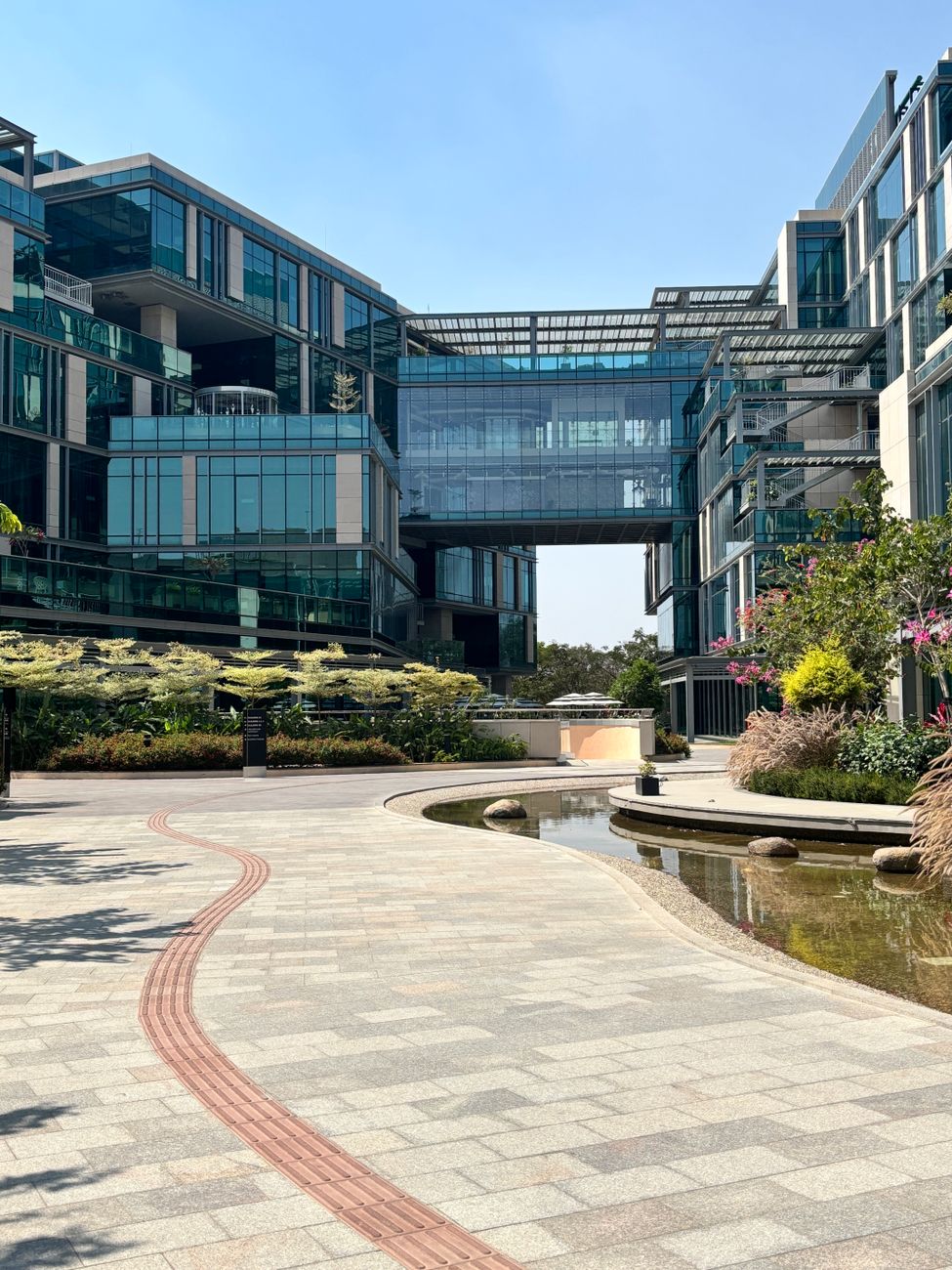
An in-depth analysis of how India’s two leading tech hubs are moving beyond rivalry to create a federated deep tech ecosystem, addressing critical funding gaps and institutional scaffolding for long-gestation innovation.
From Blitz-Scaling to Endurance: The New Deep Tech Playbook
For years, India’s startup narrative was defined by consumer apps, gross merchandise value (GMV), and the relentless pursuit of blitz-scaling. Venture capital flowed freely into business models that prioritized speed over substance, user acquisition over unit economics. But a fundamental shift is underway. As Karthikeyan Madathil, partner at Yali Capital, observes, the venture community in Bengaluru is evolving to support what he calls “long-gestation endurance” — the patience and capital required for complex, high-risk technologies like semiconductors, quantum computing, and advanced materials.,This transition marks a maturation of the Indian innovation ecosystem. Deep tech ventures don’t follow the classic J-curve of SaaS or marketplace startups. They demand years of research and development before a minimum viable product exists, let alone revenue. The old playbook of rapid iteration and pivot breaks down when your product is a quantum encryption protocol or a custom silicon chip. The new playbook requires a different kind of investor, a different kind of institution, and critically, a different kind of collaboration between cities.
The $20 Million Void: India’s Missing Growth Capital
While early-stage capital has become relatively accessible — seed rounds of $500,000 to $3 million are increasingly common — a dangerous gap yawns at the Series A and B stages. Vishnu Das of Celesta Capital identifies this bluntly: building a global deep tech product often requires a $20–25 million R&D cheque, and in India, “that’s where there is a complete blank space.”,This isn’t merely a funding shortage; it’s a structural mismatch. Traditional VCs operate on 7–10 year fund cycles with pressure to show markups. Deep tech often needs 12–15 years to reach liquidity. The result? Promising Indian deep tech startups either stall at the prototype stage or relocate to jurisdictions where patient capital exists — often the United States or Israel. Solving this requires not just more money, but new capital structures: evergreen funds, government-backed co-investment vehicles, and corporate venture arms with strategic alignment.
Hyderabad’s Institutional Advantage: Structure Over Speed
If Bengaluru represents the chaotic energy of bottom-up innovation, Hyderabad is emerging as the architected alternative. The city’s deep tech ascent is anchored by T-Hub, one of India’s most sophisticated innovation intermediaries. But T-Hub isn’t just an incubator — it’s a bridge to the country’s most demanding customers: the defence establishment, the Defence Space Agency (DSS), and strategic industry bodies.,Consider Neurowand.ai, a startup operating at the intersection of edge AI and quantum cryptography. Founder Mayank Chawla credits the T-Hub fund with connecting his team directly to defence and industrial partners — relationships that would take years to build independently. In sectors where trust, compliance, and security clearance matter more than go-to-market speed, this institutional scaffolding is a decisive advantage. Hyderabad is effectively building a “dual-use” corridor where civilian innovation meets strategic necessity, a model that has powered deep tech ecosystems from Silicon Valley to Tel Aviv.
Bengaluru’s Enduring Gravity: Talent, Research, and Capital Depth
None of this diminishes Bengaluru’s centrality. The city retains an unmatched concentration of technical talent, premier research institutions (IISc, JNCASR, NCBS), and a layered network of incubators — NSRCEL at IIM Bangalore, C-CAMP for life sciences, and dozens of corporate accelerators. Its venture ecosystem, while still skewed toward earlier stages, holds the deepest pool of domestic capital and the most experienced operator-investors in the country.,Bengaluru’s strength is scale: the ability to absorb thousands of engineers, spin up specialized teams rapidly, and iterate across adjacent domains. When a deep tech startup in Hyderabad needs to scale its engineering team or access specialized fabrication expertise, the talent pipeline often leads back to Bengaluru. The two cities are not substitutes; they are complements.
The Government as Anchor Customer: A Missing Catalyst
Both Madathil and Das converge on a critical lever: government procurement. “If governments become reliable consumers, the whole deep tech chain accelerates,” Das argues. This isn’t about subsidies — it’s about demand signaling. When the state commits to buying indigenous quantum communication systems, advanced drone swarms, or sovereign semiconductor designs, it de-risks private investment by guaranteeing a revenue pathway.,India’s recent policy shifts — the National Quantum Mission, the Semiconductor Mission, and the Defence Acquisition Procedure’s “Buy Indian-IDDM” category — are steps in this direction. But execution remains uneven. Long procurement cycles, opaque technical evaluation criteria, and a preference for proven foreign vendors over unproven domestic ones continue to frustrate startups. Streamlining this interface could unlock more private capital than any fund-of-funds scheme.
Federation, Not Rivalry: The Blueprint for India’s Deep Tech Decade
The most compelling insight from the conversation between these investors is the rejection of zero-sum competition. The future, they argue, lies in federation: Hyderabad supplies the structure — institutional bridges to strategic sectors, compliance frameworks, and patient capital channels. Bengaluru supplies the scale — talent density, research breadth, and capital markets. Together, they form a distributed but coherent backbone for India’s deep tech ambition.,This federated model mirrors successful global precedents. The Boston-Cambridge corridor combines MIT’s research engine with Harvard’s medical ecosystem and a dense VC network. The San Diego–Los Angeles axis pairs defence procurement with semiconductor design. Israel’s ecosystem links Tel Aviv’s commercial velocity with Haifa’s defence R&D. India’s version will be uniquely polycentric — and that’s a feature, not a bug.
What This Means for Founders, Investors, and Policymakers
For founders, the message is strategic clarity: choose your base not by hype, but by what your technology stage demands. Early R&D with defence applications? Hyderabad’s institutional bridges may accelerate validation. Scaling a team for a global semiconductor play? Bengaluru’s talent pool is unmatched. Many will need both — sequentially or simultaneously.
Conclusion
India’s deep tech revolution will not be won by a single city, a single fund, or a single policy. It will be built through federation — the deliberate stitching together of Hyderabad’s structural rigor with Bengaluru’s chaotic scale, anchored by a state that buys what it needs rather than only what’s proven abroad. The $20 million cheque is still missing, but the architecture to justify it is finally taking shape. For the first time, the pieces of a sovereign deep tech stack — talent, research, capital, customers, and institutions — are aligning across two cities that have learned to collaborate instead of compete. That alignment may be the most valuable intellectual property India produces this decade.
Image Credit:
Deekshith Rao

Optimizing Modern Web Applications: From Homepage Discovery to Core Usage Workflows
Read
Modern Software Integration: Architectural Patterns and Best Practices
Read
Optimizing Modern Web Applications: Balancing Homepage Experience with Deep Functional Workflows
ReadPut ideas to work.
If this sparked something, the next step is a short conversation.