How AI Data Centers Are Rewriting the Rules of Electronics Engineering
An in-depth analysis of how the explosive growth of AI data centers is forcing fundamental changes across the electronics industry, from power delivery architectures to thermal management and processor design. The New Industrial Revolution in Electronics The electronics industry is experiencing its most significant upheaval since the internet boom of the late 1990s. Back then, …
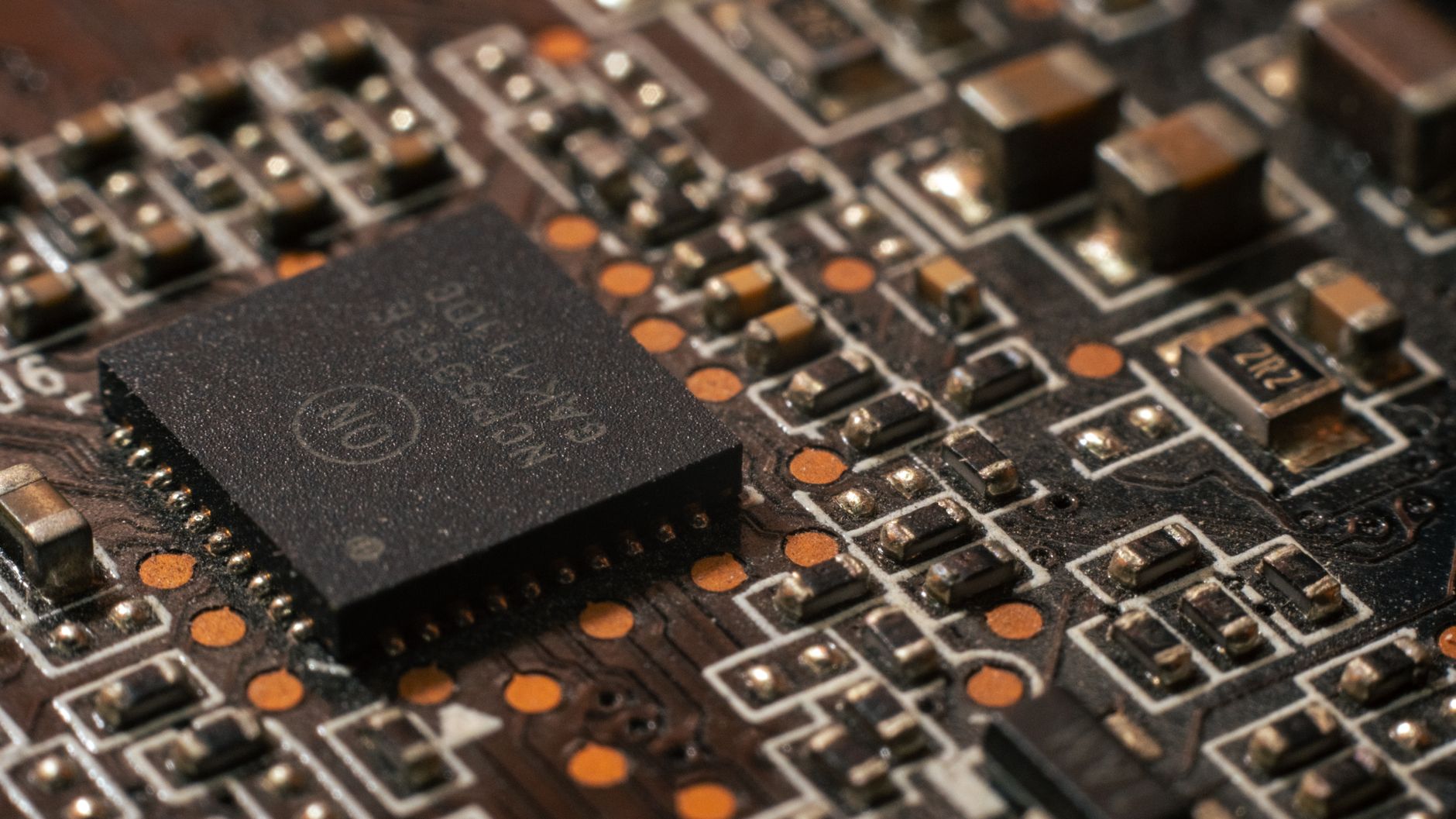
An in-depth analysis of how the explosive growth of AI data centers is forcing fundamental changes across the electronics industry, from power delivery architectures to thermal management and processor design.
The New Industrial Revolution in Electronics
The electronics industry is experiencing its most significant upheaval since the internet boom of the late 1990s. Back then, the world scrambled to build the infrastructure that would connect billions of devices. Today, a similar frenzy is underway—but the target isn’t connectivity. It’s compute. The explosive growth of artificial intelligence, particularly generative and agentic AI, is forcing a complete reimagining of data center infrastructure from the silicon up.,Market analysts project the AI data center market will surge from $129.6 billion in 2025 to a staggering $1.98 trillion by 2034, representing a compound annual growth rate exceeding 35%. This isn’t just incremental growth; it’s a fundamental restructuring of how computing power is generated, delivered, and cooled. The ripple effects are touching every corner of the electronics supply chain, from semiconductor foundries to power supply manufacturers and thermal management specialists.
Computing Demands That Defy Precedent
The numbers tell a story of unprecedented scale. Industry experts project that by 2030, GPU compute requirements will explode from 4 to 300 zettaflops. To put that in perspective, a zettaflop represents a billion trillion floating-point operations per second. Rack power densities are following a similar trajectory, climbing from today’s 50-250 kilowatts toward a projected to reach 1 megawatt per rack. Total data center electricity consumption is expected to hit 945 terawatt-hours annually.
The Voltage Revolution: From AC to DC
Traditional data centers have long relied on 208 or 415 VAC power distribution architectures. But at the power levels AI workloads demand, these legacy systems are hitting a wall. The industry is undergoing a fundamental shift toward higher voltage distribution—first to 480/600 VAC grids, with a clear roadmap toward 800 VDC architectures.,The efficiency gains are compelling. A 480 VAC architecture typically achieves 88-93% grid efficiency. Moving to an 800 VDC architecture pushes that to 93-97%. Those percentage points translate to massive energy savings at scale, not to mention significantly reduced cooling loads. The reason is straightforward: DC-to-DC architectures eliminate multiple AC-to-DC and DC-to-AC conversion stages that waste energy as heat.
Vertical Power Delivery: Bringing Power Closer to the Processor
As power densities increase, the traditional approach of delivering power laterally across printed circuit board traces becomes a liability. Long traces introduce resistance and power losses that are unacceptable at AI-scale workloads. The solution emerging is vertical power delivery—placing DC-to-DC converters directly beneath the processor on the backside of the server board.,This approach delivers multiple benefits simultaneously. Power distribution losses to the processor can drop by over 85%. Current density improves. Transient response—critical for handling the rapid current spikes characteristic of AI workloads—gets significantly better. And by freeing up board space, designers can place memory closer to the processor, reducing latency. Companies like Amber Semiconductor are already developing solutions like their PowerTile, a 1,000-amp vertical power device designed for this exact architecture.
CPUs Reclaim the Spotlight in the Age of Agentic AI
For years, the AI hardware narrative centered almost exclusively on GPUs. But the rise of agentic AI—systems that can plan, reason, and execute multi-step tasks autonomously—is elevating the CPU back to center stage. CPUs handle the orchestration layer: coordinating workflows, moving data, and managing the complex operations that surround the AI model itself.,Nvidia’s recent announcement of the Vera CPU signals this shift. Designed specifically for AI data center data processing, training, and agentic inference, Vera claims 50% better performance than traditional CPUs. Major hyperscalers including Alibaba Cloud, Meta, and Oracle Cloud Infrastructure are already lined up to deploy it. Meanwhile, AMD’s 5th Gen EPYC processors are showing 2.1x higher performance per core against competing solutions, and Intel’s Xeon 6 processors are serving as host CPUs for Nvidia’s own DGX Rubin systems, valued for their memory speed support and mature software ecosystem.
Design Tools Must Evolve Beyond Spreadsheets
The complexity of modern AI data center design has outpaced traditional engineering tools. Balancing power, thermal, and electrical performance tradeoffs requires sophisticated multi-physics simulation—yet surprisingly many teams still rely on Excel spreadsheets for critical calculations.,Spreadsheets work for static analysis but fall apart when engineers need to model the dynamic interplay between electrical and thermal parameters in real time. Advanced simulation platforms now enable ‘what-if’ analyses that can evaluate chip efficiency, signal integrity, and power integrity simultaneously. This capability isn’t just convenient—it’s becoming essential for hitting the tight performance and efficiency targets that AI workloads demand.
Cooling: The Thermal Management Crisis
Heat is the ultimate bottleneck. Racks packed with high-performance CPUs and GPUs generate heat at densities that air cooling simply cannot manage effectively. Liquid cooling has emerged as the dominant solution, with power usage effectiveness (PUE) ratios of 1.05-1.15 compared to 1.4-1.8 for air-cooled facilities. That difference translates directly into lower electricity consumption and reduced carbon emissions.
Conclusion
The AI data center boom represents a once-in-a-generation inflection point for the electronics industry. Every layer of the stack is being reinvented: power architecture is shifting from AC to high-voltage DC, power delivery is going vertical, CPUs are reclaiming critical roles alongside GPUs, design methodologies are embracing multi-physics simulation, and cooling is transitioning from air to liquid—and potentially beyond.,For engineers and decision-makers, the message is clear: the approaches that worked for traditional cloud computing won’t scale for AI. Success requires embracing new architectures, new materials like gallium nitride, new design tools, and new thermal strategies. The companies that adapt fastest will define the next era of computing infrastructure—just as the internet pioneers did three decades ago.
Image Credit:
Ivan Chumak

Optimizing Modern Web Applications: From Homepage Discovery to Core Usage Workflows
Read
Modern Software Integration: Architectural Patterns and Best Practices
Read
Optimizing Modern Web Applications: Balancing Homepage Experience with Deep Functional Workflows
ReadPut ideas to work.
If this sparked something, the next step is a short conversation.